Wednesday, May 19, 2010
Red clover
Red clover. They're bigger and usually grow taller than their white clover relatives, but otherwise look similar. These flowers are edible.
West side of the Reservoir, Central Park.
Forking catchfly
We are pretty sure this is a forking catchfly, though not completely sure. The split petals make it very distinctive.
Northwest side of the Reservoir, Central Park.
Star-of-bethlehem
Star-of-bethlehem. The picture is a little deceptive, because those heart-shaped leaves don't belong to this flower - star-of-bethlehem has long, skinny leaves which are hidden beneath the foliage.
North side of the Reservoir, Central Park.
Hairy beardtongue
Hairy beardtongue - it's easy to see that these guys are relatives of snapdragons. They have little white open mouths.
North side of the Reservoir, Central Park.
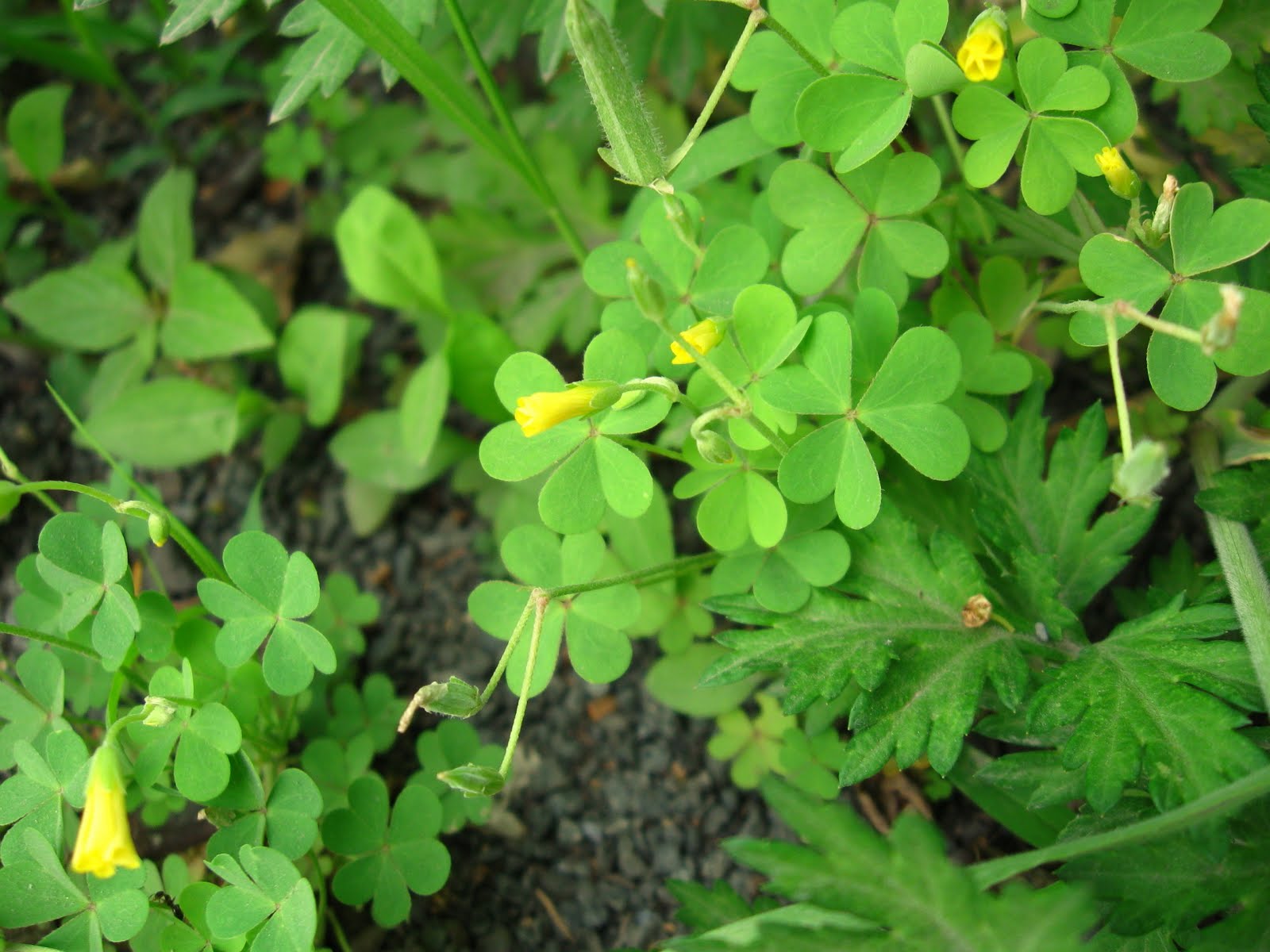
Yellow wood sorrel
Yellow wood sorrel. It looks a little bit like clover, but with those cute unmarked, heart-shaped leaves. The blooms here are closed. There is also a variety with purple flowers, which has leaves with violet undersides. Both kinds are edible and taste sour, like the sorrel vegetable (which they are not, however, related to).
Alongside the Reservoir, Central Park.
Addendum: here is an example of an open flower.
Bittersweet nightshade
Bittersweet nightshade. If you see this plant, leave it alone - like many nightshade relatives, it's very poisonous. But very unique looking, with its weird curled-back petals:
Alongside a path just south of the North Woods in Central Park.
Subscribe to:
Posts (Atom)